

Tennessee Practice Permit Test

5 out of 5 (30 votes)
80% Passing score
20 Questions
4 Mistakes allowed
The Tennessee permit practice test is worth taking seriously because Tennessee’s Class D knowledge test leaves less room for “I’ll figure it out when I get there” than some applicants assume. The official test has 30 multiple-choice questions, and you need an 80% score to pass, which means 24 correct answers. Miss more than 6, and that is the end of that attempt. For the online version, Tennessee gives you 60 minutes, which sounds generous until you hit a question about lane markings, alcohol rules, or some sign shape you swear you have seen a thousand times but never actually named in your life. This TN DMV practice test is meant to get you used to that exact territory: Tennessee traffic laws, safe driving habits, road signs and signals, right-of-way rules, pavement markings, and the everyday judgment calls that show up in the driver manual but feel a little different when they are turned into multiple-choice answers. And, honestly, that is where practice helps. Not in a dramatic way. More in the quiet, slightly boring, very effective way where the wording starts to feel familiar and the wrong answers become easier to spot. For teen drivers, this test is the first real step into Tennessee’s Graduated Driver License process. A learner permit starts at age 15, but passing the knowledge test is only part of the deal. Under-18 applicants still have the supervised-driving rules, the 180-day permit holding period, a licensed driver age 21 or older in the front seat, and later the 50 hours of driving practice, including 10 hours at night, before moving toward the Intermediate Restricted License. Adults do not have to deal with those teen GDL requirements, but they still need the documents, vision screening, and Class D knowledge test if they are applying for the first time. You can take the practice test more than once, and you probably should. One run tells you what you remember. A second one shows you what you only half-remembered. After a few rounds, the Tennessee permit test starts to feel less like a pile of scattered rules and more like a format you know how to handle — still official, still important, but no longer quite so capable of catching you flat-footed.
FREE DMV Practice Test App
Study for your Tennessee permit test or driver’s license with the NextDoorDriving app. 700+ DMV questions and answers, 100% free!
Download on the App Store

Sample Tennessee Permit Test Questions

Question 1

At an intersection without traffic signals, a driver's crosswalk duty applies to pedestrians in:

  1. A. Marked crosswalks only
  2. B. Marked and unmarked crosswalks
  3. C. Crosswalks controlled by stop signs only
  4. D. Crosswalks controlled by traffic signals only

Correct answer: B. – Marked and unmarked crosswalks

Tennessee law requires drivers to yield to a pedestrian within a marked or unmarked crosswalk when the pedestrian is on the driver's half of the roadway or approaching closely enough from the opposite half to be in danger. A pedestrian may not suddenly enter the path of a vehicle that is too close to stop safely.

Source: TCA § 55-8-134 — Pedestrians’ Right-of-Way in Crosswalks, Tennessee Comprehensive Driver License Manual — Ch. 3, “Crosswalks”

Question 2

Which statement about medications and driving is correct?

Which of these statements is true about driving and taking drugs?
  1. A. Only illegal drugs can interfere with driving
  2. B. Over-the-counter medicine can impair driving ability
  3. C. Every prescription medicine is safe if it does not cause drowsiness
  4. D. All of these statements are correct

Correct answer: B. – Over-the-counter medicine can impair driving ability

Prescription and over-the-counter medicines can impair skills needed for safe driving, even though they are legally obtained. Tennessee's manual advises drivers to read warning labels and consult a physician or pharmacist when uncertain about a medicine's effects. Do not drive when a drug impairs your ability to operate safely.

Source: Tennessee Comprehensive Driver License Manual — Ch. 7, “Other Drugs and Driving”

Question 3

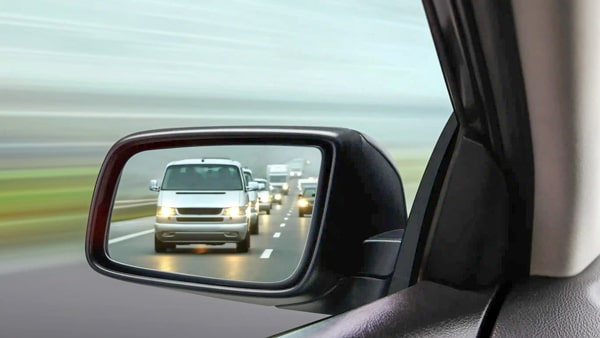
Why should you regularly check the traffic behind your vehicle?

Checking traffic behind you:
  1. A. Looking behind is more important than watching the road ahead
  2. B. It helps you recognize when another driver is following too closely
  3. C. It is necessary only while slowing down
  4. D. It is useful only before backing

Correct answer: B. – It helps you recognize when another driver is following too closely

Checking behind helps you identify a driver who is following too closely and manage the space around your vehicle. If possible, move into a right lane to let the tailgater pass. Avoid sudden braking; the manual recommends steady, gradual actions that do not increase the risk of a rear-end collision.

Source: Tennessee Comprehensive Driver License Manual — Section B, “Sharing Space”

Question 4

When may you drive left of the center of a two-way roadway?

On a two-way highway, you are allowed to drive on the left half of the roadway when:
  1. A. Whenever a double yellow centerline is present
  2. B. When a solid yellow line is on your side
  3. C. When passing is permitted and the maneuver can be completed safely
  4. D. Whenever you plan to turn left at the next corner

Correct answer: C. – When passing is permitted and the maneuver can be completed safely

Tennessee generally requires vehicles to remain on the right half of a two-way roadway. A driver may move left of center to overtake when passing is lawful, the left side is clearly visible and free of oncoming traffic for a sufficient distance, and the driver can return safely before meeting an approaching vehicle or reaching a prohibited area.

Source: TCA § 55-8-115 — Driving on Right Side of Roadway—Exceptions, TCA § 55-8-116 — Overtaking a Vehicle on the Left, TCA § 55-8-117 — Further Limitations on Driving to Left of Center of Roadway

Question 5

What is the main benefit of wearing a seat belt correctly?

  1. A. It prevents the vehicle from crashing
  2. B. It lowers the risk of injury in a crash
  3. C. It prevents all body movement
  4. D. It makes crash injuries more likely

Correct answer: B. – It lowers the risk of injury in a crash

A properly worn lap-and-shoulder belt helps restrain you during a collision and lowers the likelihood of serious injury. The lap portion should fit across the hips, and the shoulder portion should cross the chest. Do not place the shoulder belt under your arm or behind your back.

Source: Tennessee Comprehensive Driver License Manual — “Safety Belts”

Question 6

When may you drive slowly enough to impede the normal movement of traffic?

  1. A. Whenever you remain below the maximum speed limit
  2. B. When the lower speed is necessary for safety or required by law
  3. C. Whenever another vehicle is following too closely
  4. D. Only while traveling in the right lane

Correct answer: B. – When the lower speed is necessary for safety or required by law

Tennessee prohibits driving so slowly that you impede normal and reasonable traffic movement. Reduced speed is permitted when necessary for safe operation or compliance with the law, such as during hazardous weather or congestion. A violation is a Class C misdemeanor.

Source: Tenn. Code Ann. § 55-8-154(a), (e) – Minimum Speed Limits